July 30, 2026
What No One Tells You About Starting a Business in a Crisis
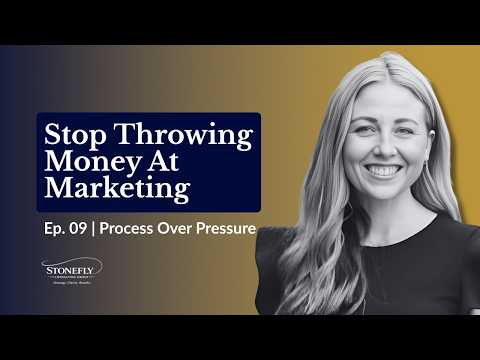
Most people don't start companies in the middle of a global pandemic. Michelle Miller did exactly that, and turned it into an eight-person B2B marketing strategy firm that's thrived for five years.
She didn't start because the timing was perfect. She started because staying put was no longer an option.
Miller had spent years in manufacturing and building products, roofing, concrete, winning awards, managing real budgets. She had the corporate playbook down cold. By her mid-20s, she'd already achieved what she thought was a 40-year goal: running a marketing department.
But in 2020, with the world grinding to a halt, she walked away from all of it to build Creativate Aid from scratch.
What's remarkable isn't just that she did it. It's how she did it, with a focus on process over tactics, foundations over quick wins, and human connection over automation.
The Roadblocks You Put in Your Own Way
Miller first considered entrepreneurship in 2018. She had the idea. She had the experience. But she also had a long list of reasons why she couldn't do it.
She was too young. She didn't have an MBA. She didn't know how to handle payroll or insurance or accounting. She was a single woman with a mortgage and bills to pay.
Every reason felt legitimate. Most of them weren't.
Working with coach Christine Hockman, Miller learned to recognize the difference between real obstacles and the ones her brain manufactured to keep her safe. She went through a 12-week mindset program that taught her how fear works, and how to work with it.
One analogy stuck: kayaking down a river.
When you're paddling downstream and you come to a bend, you don't know what's around the corner. Rapids? Wildlife? A group of drunk tubers? The uncertainty is the point. It's also the thrill.
Miller started asking herself a different question: What if this is better than I ever imagined?
It's a simple shift. But it's the difference between staying stuck and moving forward.
She started small. She calculated her bare minimum monthly expenses, mortgage, food, gas. She kept her full-time job and started consulting on the side. She tested the water before diving in.
By the time the pandemic hit, she was ready to make the leap.
Building Without a Blueprint
Miller didn't set out to build a certified women-owned business with an all-remote team of working moms. She didn't plan to specialize in sales and marketing enablement for B2B companies.
She just started solving problems for people who needed help.
When it came time to hire, she asked her team: Who do you want to work with? Who have you worked with before that you'd bring in if you could?
The candidates who came forward were all women. Many were moms juggling school drop-offs, bus schedules, and school programs. The remote model Miller had built made it possible for them to do excellent work while still showing up for their families.
Five years later, the team is eight people strong, all women, all high performers, all committed to getting things done.
Miller is quick to point out that this wasn't intentional. She didn't exclude men. She didn't start with a mission to build a women's-only firm. But she also didn't ignore the pattern when it emerged.
She leaned into it. She became a certified woman-owned business. She built a company that works for the people on her team.
The Gap Between What Owners Think and What's Actually Broken
One of the patterns Miller sees over and over: founders and owners who think everything is running smoothly.
They've hired smart people. Revenue is coming in. Things seem fine.
But when you dig deeper, when you talk to the team members two levels down, you find 25 different workarounds holding the whole operation together.
High performers compensate for broken processes. They figure it out. They make it work. That's why you hired them.
But it masks the problem.
Miller calls it corporate therapy. Her team goes in, asks questions, and peels back the layers. Often, the client doesn't realize there's an issue until the conversation starts.
One of the first things she asks for: a documented sales pipeline.
What she usually finds: ten team members with ten different versions of that pipeline, each tracking things their own way.
That's not a people problem. It's a systems problem.
And it's fixable, once you name it.
Why Foundations Matter More Than Tools
Miller is blunt about this: if your foundation isn't solid, no tool will save you.
It doesn't matter if it's HubSpot, a new CRM, an AI automation, or the latest marketing platform. If the processes underneath aren't documented and working, you're just layering more complexity on top of a shaky structure.
She's seen it firsthand. A client comes in with HubSpot already set up, badly. The sales team was oversold. The system is bloated. Objects and properties are a mess.
Her team tries to optimize it, but they're limited by what's already there. They're renovating a house with a cracked foundation.
The better path: start fresh. Document the workflow. Build it right the first time.
Miller's team has started using Super to deploy pre-built processes, systems, and objects specifically for industries like auctions. It's faster. It's cleaner. And it works because the foundation is intentional.
She also points to the biblical principle: a house built on sand will fall. Laying a strong foundation isn't sexy. It takes time and discipline. But it's the only way to build something that lasts.
The Coaching Model That Actually Works
Miller doesn't do one-off projects. She doesn't parachute in, hand over a strategy deck, and disappear.
Her model is coaching-based. It's about walking alongside clients, not just telling them what to do.
She'll build the strategy. She'll implement the tools. But she'll also train the internal team so they can sustain it after she's gone.
It's the difference between dependency and empowerment.
She's seen too many consultants create systems that only they understand. When they leave, the client is stuck. The work doesn't continue.
Miller's approach is different. She wants her clients to outgrow her.
That means documentation. It means knowledge transfer. It means saying no to things that aren't a fit.
It also means being realistic about what's possible. If a client wants to automate something, Miller's first question is: have you documented the process yet?
You can't automate chaos. You have to clean it up first.
What AI Won't Replace
Miller is paying close attention to AI. She's seeing it used for content creation, campaign building, and automation.
But she's also seeing the noise level increase.
Every company now has access to the same tools. Everyone can generate content at scale. The inbox is more crowded than ever.
That creates an opening.
The companies that will win aren't the ones with the most automation. They're the ones that understand where human connection still matters.
AI can handle a lot. But it can't replace a discovery call where you listen, ask the right questions, and uncover what's really broken.
It can't replace the moment when a client feels heard for the first time in months.
Miller's team leans into those moments. They're corporate therapists, yes. But they're also builders. They take what they learn in those conversations and turn it into systems that work.
What Entrepreneurs Miss Most Often
Miller has identified a few recurring blind spots among the business owners she works with:
They don't document their processes. Everything lives in someone's head. When that person leaves, the knowledge walks out the door.
They confuse activity with strategy. They're posting on social media, running ads, going to trade shows, but there's no cohesive plan tying it together.
They underestimate the power of alignment. Sales and marketing operate in silos. No one's talking to each other. The messaging is inconsistent.
They assume high performance means everything's fine. If the team is delivering, the systems must be working. Usually, the opposite is true.
The fix isn't complicated. It's just not easy.
It requires slowing down long enough to ask: what are we actually trying to do here? And is the way we're doing it the best way?
Putting This to Work
If you're a founder, operator, or team leader trying to scale without losing your mind, here's where to start:
Map your bare minimum. Like Miller did before she started her company, write down the essential numbers. What does survival actually cost? Once you know that, the risk becomes measurable.
Audit your workarounds. Talk to the people doing the work. Ask them what's broken, what's clunky, and where they're improvising. You'll find patterns fast.
Document one process this week. Pick the one thing your team does most often. Write it down step-by-step. Make it accessible. That's your foundation.
Ask better discovery questions. Whether it's with clients, team members, or yourself, go deeper. Don't settle for "things are fine." Peel back the layer.
Build coaching into your model. If you're bringing in outside help, make sure the engagement includes knowledge transfer. If you're leading a team, make sure you're training people to think, not just execute.
Identify where human connection matters most. You don't have to be everywhere. But be fully present in the moments that matter, the ones that build trust, clarity, and alignment.
Miller didn't start her business with a five-year plan. She started with a mortgage payment and a willingness to figure it out.
Five years later, she's running a team, serving clients, and proving that you don't need perfect timing to start something real. You just need a solid foundation and the guts to build on it.
---
Ready to Build Your Foundation?
If you're stuck in the gap between where you are and where you want to be, you're not alone. Most founders are. The difference is knowing what to fix first.
Take the self-assessment at https://form.typeform.com/to/r5n2Lxd4 and get a clear picture of where your biggest opportunities are. It's free, it's fast, and it'll give you a place to start.
Subscribe
Get the real founder stories in your inbox
New interviews, the lessons behind them, and the occasional gut check. No fluff, no spam.