July 30, 2026
The Real Cost of Scaling Without Culture
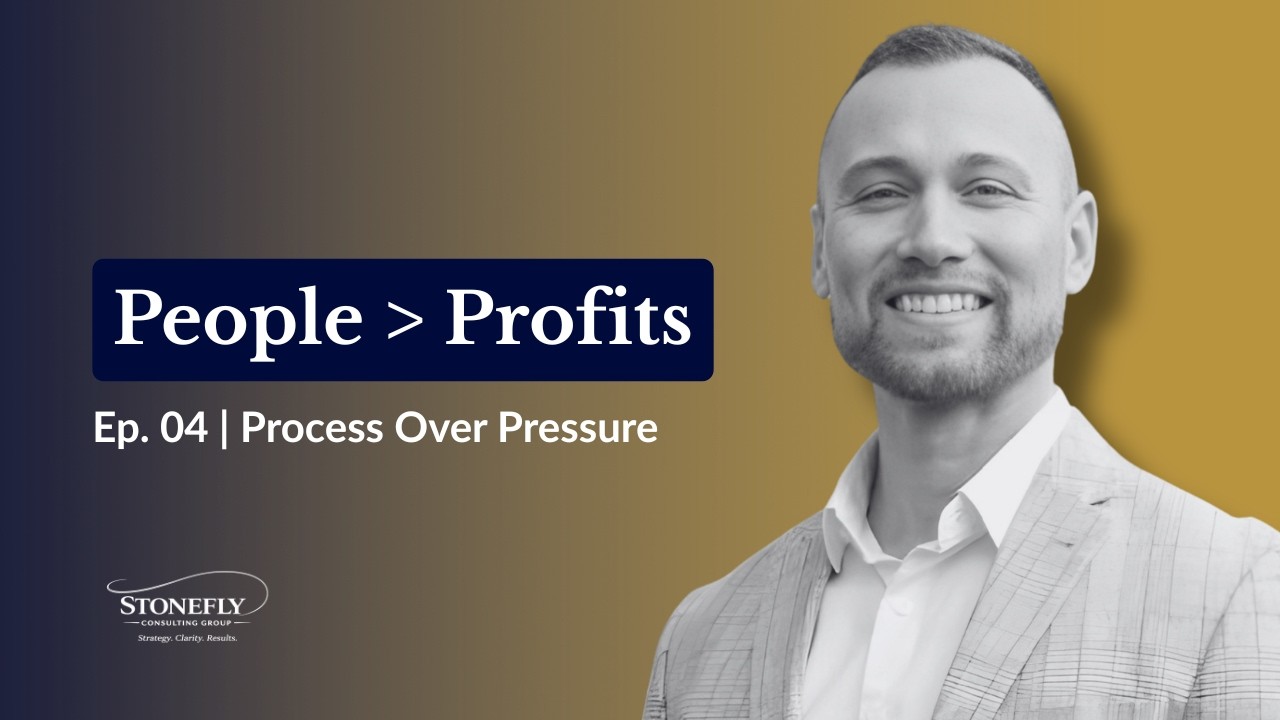
In March 2020, at the exact moment the world shut down, Corey Boxx's business partner Adam faced a decision most people would have frozen on. He had hit a crossroads in his property management work: keep managing only his own properties, or hire his first employee and build something bigger. He chose to hire. That single decision, made at the scariest possible time, is where this story starts.
Five years later it has cascaded into a $250 million operation managing over 1,000 units with 50-plus employees, and a culture system that keeps 95 to 97 percent of the team local and rooted. Corey runs it alongside Adam, and he's the one I sat down with to understand how it actually works.
What I found wasn't a playbook. It was something harder: a leader who learned that culture compounds faster than revenue, and that the moment you stop treating people like problems to manage and start treating them like assets to grow, the entire operation shifts.
Most scaling stories follow the same arc: hire fast, systematize, hope the culture sticks. Corey's is different. He's helped build a flat leadership model in an industry (property management) where top-down control is the default. He brought construction and maintenance in-house in a market starved for skilled trades. He makes intentional decisions about what the business does and, harder still, what it stops doing. And he does all of it while being honest about his own flaws as a leader.
The lesson isn't "here's how to scale." It's simpler and more honest: the business reflects all your flaws, not just your strengths. Until you see that, you can't fix it.
The Hiring Decision That Changed Everything
When Adam decided to hire his first employee in March 2020, he wasn't following a growth plan. He was at a crossroads: keep managing his own properties, or build a team to do it with him. He chose the team, at the worst possible time, which tells you something about how he thinks about risk.
Corey described it plainly: "In 2020, interestingly enough, Adam was at a crossroads. He was going to either fire me as a client and only manage his own properties or he's going to have to decide to hire somebody. He hired his first employee interestingly enough was that March 2020."
That decision forced structure. It's easy to run a one-person shop on instinct and hustle. It's impossible to run a 50-person operation the same way. The moment you hire that first employee, someone has to decide whether the business leads its people or manages them. Corey has been the one to answer that, and his answer dismantled the command-and-control default in real estate.
"I like a flat leadership style," he told me. "Today's world it does not serve well to that top down leadership to maybe like the 1950s where you everyone's scared of the CEO or your boss. I work with my people and largely I work for my people."
That's not a soft leadership philosophy. It's a structural choice. It means decision-making is distributed. It means the leader isn't the bottleneck. It means your job is to remove obstacles, not create them.
Property Management Is Problem Management
Here's what Corey figured out that most property managers never do: "Property management and problem management are interchangeable, right?"
The only time an owner or resident calls is when something is broken. There's no proactive relationship. There's no joy in the interaction. The entire relationship lives in complaint mode. So when you scale, you're scaling complaint mode. If your system is built around reacting to problems instead of preventing them, you're building a business that gets worse the bigger it gets.
That's why Corey made the hard call to bring construction and maintenance in-house. Most property management companies outsource that work. It's cheaper per unit, at least on paper. But the actual cost is hidden: slower turnarounds, quality control nightmares, and a team that takes the blame for problems they didn't create.
He hired electricians, HVAC techs, plumbers. He built internal capability in trades where the labor market is brutal. This is the opposite of what most scaling operators do, which is to outsource and lighten the load. He went deeper into the problem instead of away from it.
The payoff isn't just operational. It's cultural. The team owns the wins. They're not pointing fingers at an outside contractor. The work is tight, or it isn't. And when it's tight, they feel it.
"It takes three times the resources to fix a problem than it does to avoid it on the front end," Corey said. He's lived that math. Prevention costs less than cure. But prevention requires discipline, and discipline requires systems, and systems require people who care about what they're preventing.
The Perfectionism Trap
Here's where Corey gets honest about himself: he's a perfectionist. And perfectionism, at scale, is a bottleneck.
"Probably my greatest flaw as a leader is I'm a bit of a perfectionist," he said. "Sometimes I'm bad about taking stuff off my plate and giving it to other people. I spend time on things I probably shouldn't do."
This is the moment most leaders stop talking. Most don't say it out loud. Corey did, which is why he's also the kind of leader who has a system to fix it.
He writes down everything that's eating his time. Separately, he writes down what he should actually be doing based on what moves the business forward most. Then he cross-references the two lists. "It's almost always simpler than we think it is," he said.
The stuff on the first list but not the second? Either it gets delegated or it gets killed. It's not complicated. But it requires you to admit that your effort isn't the same as impact, and that your attention span is finite.
The trap is thinking that if you just work harder, or hire smarter, or build better systems, you can have it all. You can't. Every hour you spend on something that doesn't move the needle is an hour you're not spending on something that does. And more critically, it's an hour your team sees you not delegating, which tells them that either you don't trust them, or you don't think they can do it right.
Corey flips that. "The role of CEO is not to be the business shouldn't flow from them entirely. It should flow through them in a lot of ways."
That's the difference between scaling a business and just making it bigger. One scales power and decision-making. The other concentrates it.
Culture as a Competitive Advantage
After years of building, the team is 95 to 97 percent local to St. Louis. In an industry where turnover is brutal and loyalty is rare, that's a moat. It's also a signal that people aren't looking to leave.
Corey runs monthly nomination systems where team members call out wins, and bonuses flow to those who get nominated. It sounds simple. It is. But it works because he's not trying to buy loyalty. He's building identity. People stay because they're part of something that works, not because the paycheck is slightly higher than somewhere else.
"Money is certainly no end all be all," Corey said. "It is largely how you feel about what you do and who you help with it, that's your legacy."
That's not motivational poster talk. That's a leader who has watched a 50-person team carry the operation through one of the strangest three years in recent history, starting during a pandemic. Culture doesn't compound because you're nice. It compounds because people know what they're building is real, and they're trusted to build it.
The other side of this coin is decision-making. Corey doesn't make unilateral calls, even now. "We don't make unilateral decision in this business even myself right. Push come the shove ultimately I guess I wear the hat where I could just say it's my way this how we're going to do it that never works long term."
That's the restraint that matters. The leader has the ultimate say, but he uses it as a last resort, not a first move. Everything else is distributed. And when you distribute decisions, you distribute ownership. And when people own the outcome, they show up differently.
The Choice in Front of You
Corey ended our conversation with a question that sits differently now: "Either everything happens to you or you make everything happen. And I think you got to decide what camp you fall into."
Most operators live in the first camp. Things happen to them. The market shifts. Employees leave. A crisis hits. They react. They manage. They try to control everything because the alternative feels like chaos.
Corey and Adam chose the second camp. They made things happen. They hired in March 2020. They brought construction in-house when the market said it was impossible. They built a flat leadership structure in an industry built on hierarchy. Corey wrote down his flaws and decided to fix them instead of outsourcing them.
That's harder than the alternative. But it's also why, at 50 people and $250 million in assets, the team hasn't scattered to the wind. They haven't left for slightly better pay. They haven't chased the grass that looks greener somewhere else.
"The grass is greener mindset robs you of your current joy and your current upskilling with yourself and your people," Corey said. He's watched that play out in his industry enough times to know it.
The real work isn't the real estate. It's not the construction. It's not the systems. It's deciding whether you're going to be a leader who builds culture intentionally, or a manager who hopes it sticks. One compounds. The other just gets louder.
By Chad Paris, Stonefly Consulting Group
Subscribe
Get the real founder stories in your inbox
New interviews, the lessons behind them, and the occasional gut check. No fluff, no spam.