July 30, 2026
From Drywall to Deals: Why Real Estate Success Isn't About Capital
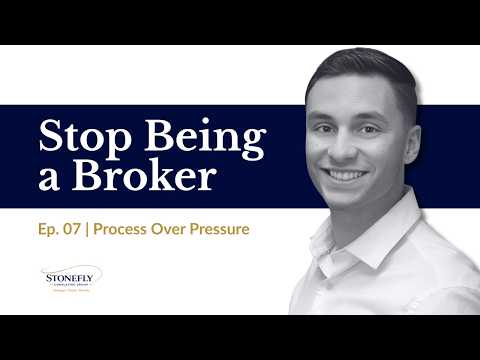
Christian File made $17,000 his first year in commercial real estate. He was hungry, underselling every broker in the room, and running on what he calls "air and grit." Three years later, he co-founded the commercial division at Berkshire Hathaway New Mexico and is managing millions in transactions across the state.
The story isn't about getting lucky or finding capital. It's about watching his grandfather survive four heart attacks while running a construction crew, seeing the liability and pressure crush his father and uncles, and deciding there had to be a better way to build wealth without building an unsustainable business.
That pivot taught him something most founders learn too late: the hard part isn't money. It's finding the right deal. And once you understand that, everything else changes.
The Weight of Inherited Models
Christian grew up in construction. His grandfather, less File, started drywall work in Albuquerque in the 1950s after leaving the Oklahoma panhandle and serving as an MP. By the time Christian was old enough to hold a hammer, his grandpa was managing a growing crew. The work was real. The results were visible. Buildings rose from dirt.
It was also destroying him.
"My grandpa had four heart attacks during his lifetime," Christian told me. His father and uncles followed a similar path. They loved the work. They loved building. But they were carrying the full weight: liability, payroll, lawsuits, insurance, the constant pressure of feeding 350 mouths.
Christian learned the trade early. Every summer starting at thirteen, he was on job sites. He understood the mechanics of construction, the satisfaction of seeing a project completed. But he also watched what the business model did to the people running it. He saw the cost, not just in dollars, but in health and peace of mind.
"I had to worry about the liability of, hey, I have to manage 350 people I have to be responsible for 350 mouths to feed right all of that stuff is to me was too much pressure," he said.
That clarity mattered. A lot of people romanticize their family business and follow the same path by default. Christian loved the building and creating aspect. He hated the unsustainable pressure. So he asked himself a hard question: how do I get the same satisfaction without carrying the same liability?
The answer wasn't obvious. It took him into commercial real estate, a sector he "just happened into," but which turned out to be one of the best vehicles to take him where he wanted to go.
The First Three Years Plant Seeds That Don't Fruit
Starting as a transactional broker is not a fast path to wealth. His first year, Christian made $17,000 while working side jobs to cover rent. He was learning the mechanics of deal-making while operating on fumes.
But he was also learning something that most brokers never internalize: the deal is the hard part. Not the capital.
"You don't need physical money to invest in real estate," he said. His first syndication deal proved it. A property owner wanted to sell 1510-1512 First Street at $39 per square foot. The market rate was $75 to $80. That gap told Christian something was wrong with the market perception, not the building. He had no capital of his own. But he had something more useful: he could identify the mispricing.
Christian assembled the deal without buying it himself. He brought the tenant. He structured a syndication with a mentor. He didn't own the property, but he owned the deal-finding. That's where he took his equity. Then he rolled the commissions back in.
"Money isn't the hard part. It's finding the right deal. That's the hard part," he said. "If the deal's there, the money will come."
This is the inversion that separates founders who build real businesses from founders who build jobs. Most people assume capital is the constraint. So they spend years trying to save money or pitch investors. Christian assumed the constraint was judgment and positioning. So he spent his first three years putting himself in the room where deals happened.
"Put yourself in the presence of those who do business, put yourself in that energy, put yourself in the same physical vicinity and room, right?" he said. He attended every networking event. He asked questions. He offered to work on other brokers' leads for free. He built rapport by showing up, not by having a big portfolio.
"I started off that, I started building rapport. And they started giving me their crummy leads, right?" Once he proved he could work those crummy leads, the better deals came.
Collaboration Over Competition Changes Everything
After three years at his first firm, Christian realized the commission splits weren't sustainable. He and his partner Jacob Lopez needed to own their own operation if they were going to build something real. So they started their own commercial division.
What followed was chaos. Not failure. Chaos. There's a difference.
"You had to build everything from scratch. I had to find a sign guy. I had to do branding. We had to fricking switch all of our listings over. It was chaos. It's still chaos, right? It's three years in, it's still chaos, but it's culminating into something that is becoming more structured."
Most founders hit this point and panic. They try to hire faster, scale faster, or cut corners to reduce the noise. Christian did something different. He stopped thinking about competition and started thinking about collaboration.
"Competition is a low vibration frequency and collaboration is a high vibration frequency," he said. "Your competitors can actually be some of your best collaborators."
This isn't motivational speaking. It's practical economics. In commercial real estate, your competitor today might bring you your biggest deal tomorrow because they know your work ethic and your judgment. The real estate market in New Mexico is shaped by government funding and Permian Basin oil and gas operations. You can't own that flow alone. You need a network.
That shift changed how Christian approached mentorship, hiring, and growth. He stopped measuring himself against other brokers. He started asking for help when he needed it. And he realized that "Pride is the destruction of any great empire."
Building Process When Everything Is Chaos
Three years into the commercial division, Christian is managing 70 listings, eight offices statewide under residential division with 300 brokers, and working toward something more structured.
How? By treating process as the thing that scales, not people.
"The more you can automate things, the better. You still do need people. People are always going to be a huge component," he said. But the people component is only valuable if the process is repeatable. He's building standard operating procedures obsessively. He's using AI tools to create underwriting templates and video automation pipelines from blog content.
This is the inverse of the construction company trap his family fell into. You can't scale a construction crew. You can scale a process that other brokers can follow. You can't manage 350 people without losing your mind. You can manage a team that follows a clear system.
"You're not in competition with anybody and to ask for help when you need it and not be prideful," he said. That's the real lever. Not capital. Not hustle alone. Process that lets good people do good work without burning out.
The lessons Christian pulled from his family's construction business were clear: liability kills businesses, pressure kills people, and unsustainable models look fine until they don't. What he built instead was a model where the limiting factor isn't managing more people or carrying more risk. It's identifying better deals, building better relationships, and putting better people inside better systems.
That's how you go from $17,000 to millions without becoming your grandfather.
By Chad Paris, Stonefly Consulting Group
Subscribe
Get the real founder stories in your inbox
New interviews, the lessons behind them, and the occasional gut check. No fluff, no spam.